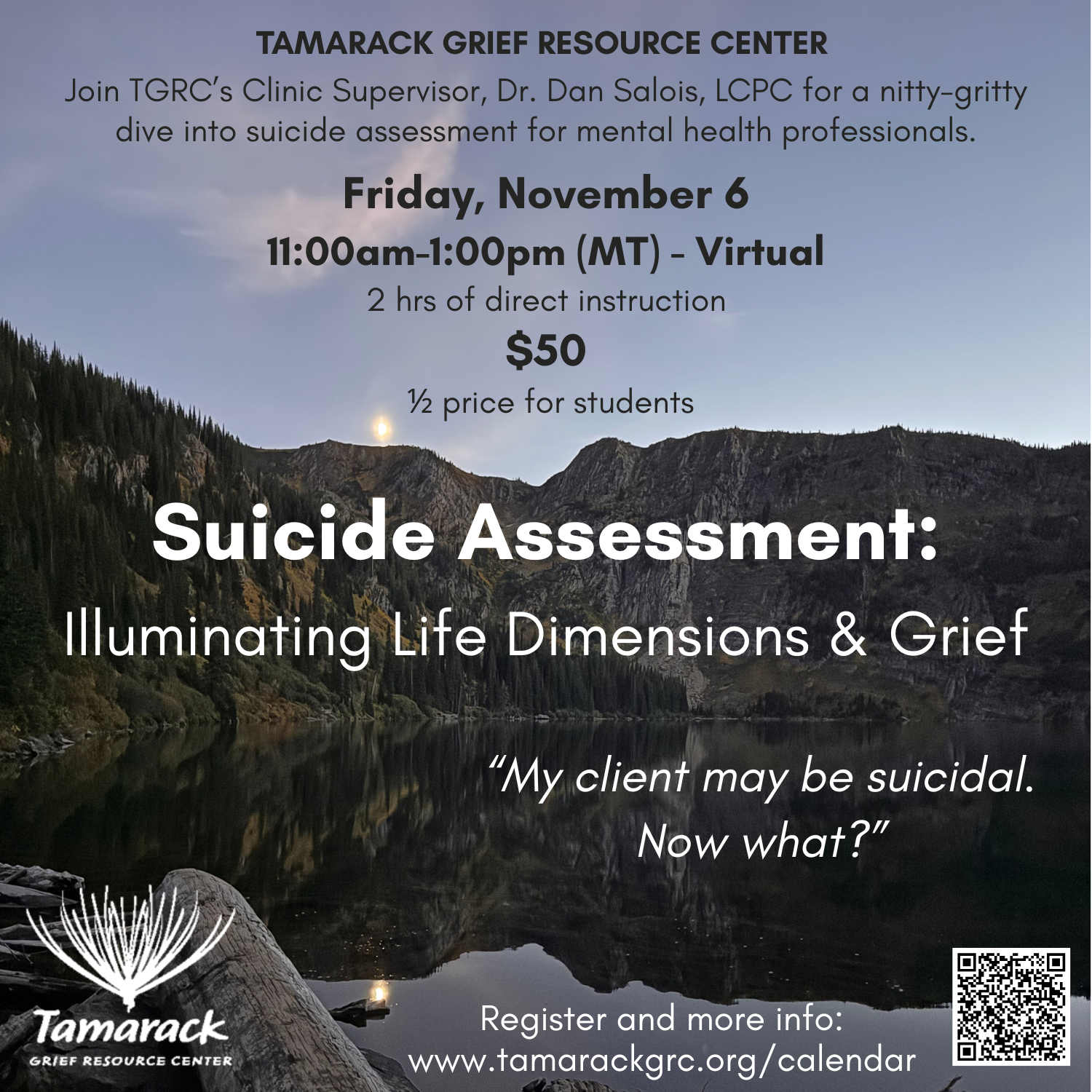
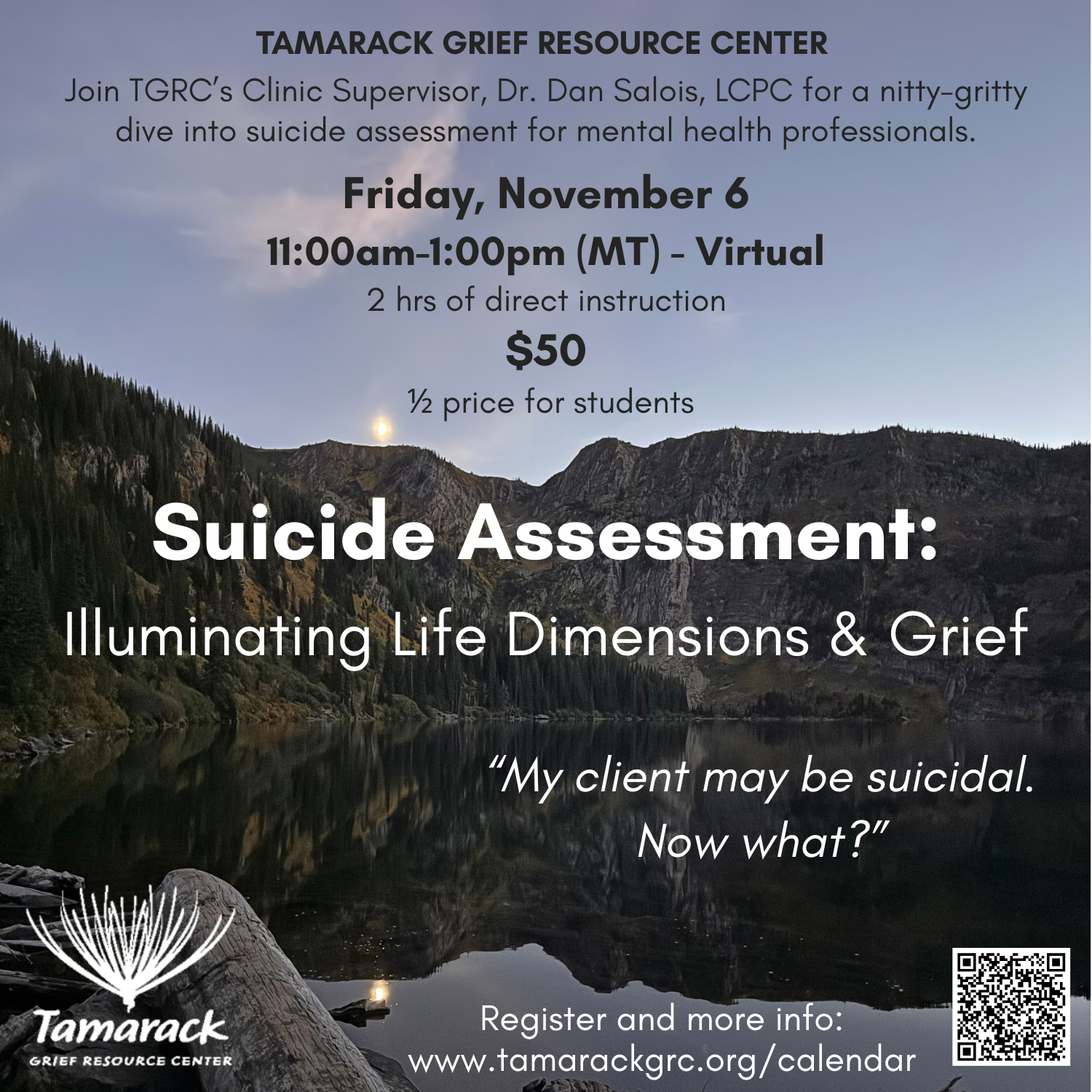
Answering the question: “My client may be suicidal. Now what?”
Join TGRC’s Clinic Supervisor, Dr. Dan Salois, LCPC for a nitty-gritty dive into suicide assessment.
This practical workshop equips clinicians with a collaborative, whole-person approach to assessing and responding to suicidal ideation. Moving beyond risk checklists, participants learn to explore thoughts, plans, and intent while identifying and building on client strengths across emotional, cognitive, interpersonal, physical, cultural, and behavioral domains.
Core topics include differentiating risk levels with and co-creating actionable safety plans. Emphasis is placed on empathy, realistic strategies, lethal-means restriction, decision-making about hospitalization, and practical tips for in-person and remote sessions.
Participants leave with tools and confidence to treat the whole person, reduce distress, and support safer outcomes.
Objectives:
Apply a strengths-based approach to discussing suicidal ideation through empathy, normalization, and collaboration.
Identify key components of suicide assessment, including suicidal ideation, plan, intent, access to lethal means, and protective factors.
Assess emotional, cognitive, interpersonal, physical, cultural, and behavioral factors contributing to distress while identifying corresponding strengths.
Develop collaborative, individualized safety plans that incorporate coping strategies, social supports, professional resources, and lethal means safety.
Reach out to TGRC’s Associate Director, Meg Smith, with any questions: megs@tamarackgrc.org.
Dr. Daniel Salois is an Assistant Professor in the Department of Counseling at the University of Montana and a Licensed Clinical Professional Counselor (LCPC). He maintains an active clinical practice, supervises community-based counselors and graduate and doctoral counseling students, and focuses on promoting mental health and wellness within communities, particularly educational systems. His professional interests include grief and loss, trauma-informed counseling, and evidence-based approaches to mental health care.