
Tamarack Grief Resource Center presents
Grief Institute 2026
April 14-17, 2026
Missoula, MT or virtual
Grief Institute 2026
Date/Time:
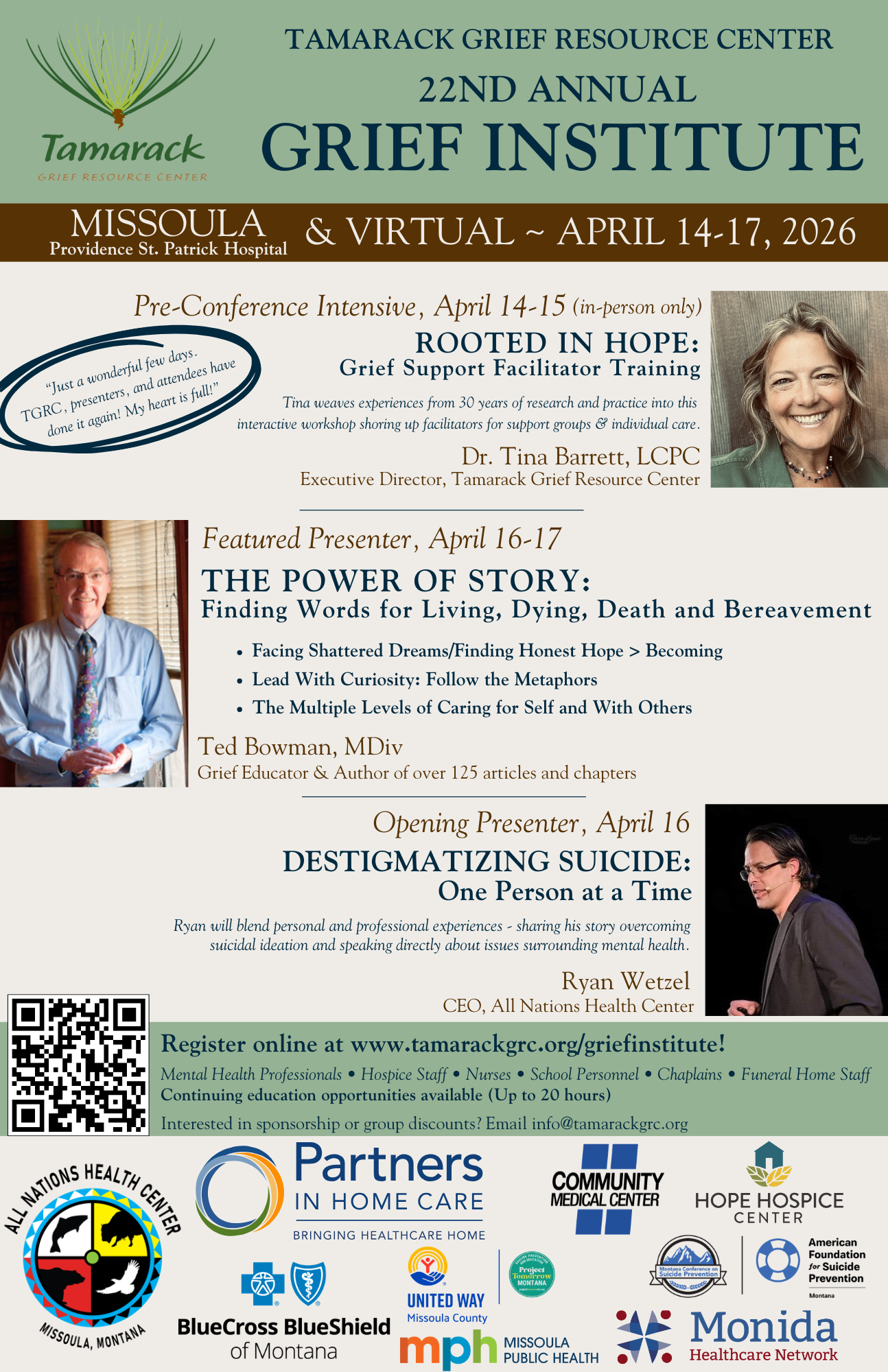
Pre-Conference Intensive: Tuesday, April 14 (4:30pm-6:30pm) - Wednesday, April 15 (9:00am-4:30pm)
Thursday, April 16 (9:00am-4:30pm) - Friday, April 17 (9:00am-4:30pm)
Location: Providence St. Patrick Hospital, Broadway Building Conference Rooms, Missoula, MT (Thursday and Friday sessions also available virtually)
Continuing Education available: Board of Behavioral Health (BBH); Office of Public Instruction (OPI); Nursing CEs
Pricing:
Pre-Conference Intensive (April 14-15): $150
One day (April 16 or 17): $100
Two days (April 16 and 17): $175
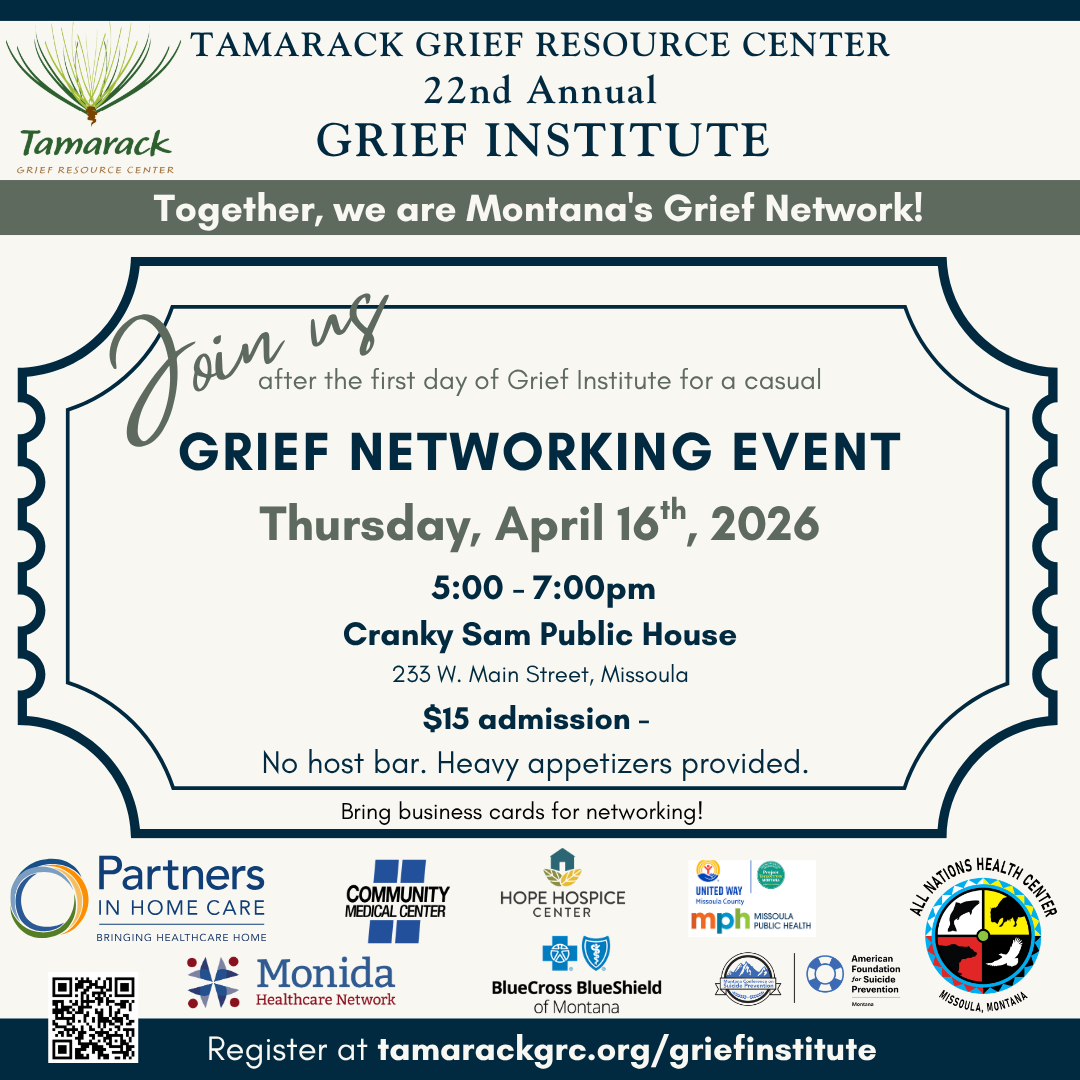
Grief Networking Event (April 16): $15, no host bar
Add CEs: +$50
*Lunch included Thursday, April 16 and Friday, April 17.
Travel:
Thank you to Residence Inn by Marriott Downtown Missoula for extending a discounted rate to our conference attendees!
At just 0.7 miles from the conference center, you’re walking distance to Grief Institute, the River Path, and Missoula’s amazing downtown restaurants. Use the below link to book within the Grief Institute Room Block at $189/night + taxes/fees.
Deadline for utilizing the conference rate was extended to April 1! Make sure to book your room before then to ensure you get the discounted rate.
Since 2005, Grief Institute has provided a top-quality, inspiring, and practical training for professional counselors, educators, hospice personnel, nurses and psychologists across Montana. Grief Institute is a two-day annual professional seminar committed to the continued advancement of knowledge and skills relating to end-of-life and grief to strengthen our state’s network of care. TGRC is committed to bringing the best-of-the-best to Missoula each year for Grief Institute — passionate, knowledgeable, engaging speakers who are able to blend research and ideas with practical tools all the while integrating personal stories, ethics, theory.
Join us Thursday, April 16 for the Grief Networking Event!
Schedule
Tuesday, April 14
Grief Support Facilitator Training @ Providence St. Patrick Hospital Broadway Conference Rooms, Dr. Tina Barrett - 2 CEs available
4:30pm - 6:30pm
Wednesday, April 15
Grief Support Facilitator Training @ Providence St. Patrick Hospital Broadway Conference Rooms, Dr. Tina Barrett - 6 CEs available
9:00am-12:15pm - Grief Support Facilitator Training, Dr. Tina Barrett
12:15-1:15pm - Lunch (on your own)
1:15-4:30pm - Grief Support Facilitator Training, Dr. Tina Barrett
Thursday, April 16
Professional Seminars @ Providence St. Patrick Hospital, Broadway Building Conference Rooms, 9:00am-4:30pm - 6 CEs available
9:00-11:00am - 2-hour training, Ryan Wetzel – Destigmatizing Suicide: One Person at a Time
11:15am-12:15pm - 1-hour training, Ted Bowman - Narrative Power: Finding Words for Living, Dying, Death, and Bereavement
12:15-1:15pm - Lunch (provided)
1:15pm-4:30pm - 3-hour training, Ted Bowman - Facing Shattered Dreams/Finding Honest Hope > Becoming
5:00-7:00pm - Montana Grief Networking Event. Location TBA.
Friday, April 17
Professional Seminars @ Providence St. Patrick Hospital, Broadway Building Conference Rooms, 9:00am-4:30pm - 6 CEs available
9:00am-12:15pm - 3-hour training, Ted Bowman - Lead with Curiosity: Follow the Metaphors
12:15-1:15pm - Lunch (provided)
1:15-2:15pm - 1-hour training, moderated by Tina Barrett - Grief in Montana: An Interactive Panel
2:30-4:30pm - 2-hour training, Ted Bowman - The Multiple Levels of Caring for Self and With Others
More about the sessions:
Pre-Conference Intensive
Dr. Tina Barrett, EdD, LCPC, Executive Director - Tamarack Grief Resource Center
Tuesday, April 14 (4:30-6:30pm) - Wednesday, April 15 (9:00am-4:30pm)
Grief Support Facilitator Training (8 hours): Many people identify feeling isolated amidst grief. Simultaneously, it can seem that our usual repertoire of coping skills falls short. Groups can offer a positive support network with opportunities to learn and practice constructive outlets for a range of emotions. This interactive workshop with Tina Barrett, EdD, LCPC, explores the benefits of group interventions for youth and adults who are grieving the death of a family member or other types of losses. We will outline models of grief and trauma care related to group work and discuss tools and ideas for coordinating and facilitating grief support groups and introduce an 8-week model for 1:1 peer support when group support is contraindicated. This training will include special considerations for grief after suicide. Considerations for coordination and implementation as well as common challenges in groups will be addressed.
Objectives:
Outline grief responses for children & adults
Understand benefits of groups
Examine considerations for grief involving suicide /trauma
Identify four grief styles
Explore techniques for managing difficult behaviors
Learn self-regulation tools
Understand contraindications of group interventions
Introduce an 8 week 1:1 Grief Support Model
Engage in somatic, creative, narrative, & symbolic activities
Opening Speaker
Ryan Wetzel, CEO - All Nations Health Center
Thursday, April 16, 9:00-11:00am
Destigmatizing Suicide: One Person at a Time (2 hours): As former board member of the American Foundation for Suicide Prevention Montana Chapter and longtime Suicide Prevention Specialist in Montana, Ryan uses a combination of personal and professional experiences to address the importance of speaking directly about issues surrounding mental health. Ryan shares his story of how he overcame suicidal ideation and how he helped individuals that were suicidal get back on track and start living their lives again. He addresses the importance of speaking directly about issues surrounding the health of himself and others, and how he learned to share his feelings throughout the process. The audience will leave with an increased understanding of how effective communication tools can have countless impacts on a person’s overall well-being.
Objectives. At the end of this workshop, participants will be able to:
Outline how depression and anxiety impact a person's cognitive process
Differentiate between positive and negative coping strategies
Identify effective communication tools to address suicide and impact well-being
Featured Speaker
Ted Bowman, MDiv, Grief Educator & Consultant
Thursday, April 16, Session 1: 11:15am-12:15pm (60 minutes)
Narrative Power: Finding Words for Living, Dying, Death and Bereavement
When losses occur, words are sought…sometimes found…sometimes offered. Drawing on bibliotherapeutic and narrative therapy principles, perspectives and tools for narrative power will be presented, demonstrated and discussed. Narrative is not about having people tell their stories. Narrative is interested in power – who has the power to speak stories into existence. Voices of grievers and the bereft, thereby, are heard and validated.
Using metaphor and related prompts, participants will be invited to consider using stories as prompts for words that foster grieving and healing.
Objectives: By the end of the session, participants will:
Discuss multiple meanings of metaphors
Be more confident about listening to client accounts, their stories
Outline two therapeutic uses of stories in your practices
Identify one tool related to grief and trauma care they can integrate into practice
Thursday, April 16, Session 2: 1:15-4:30pm (3 hours)
Facing Shattered Dreams/Finding Honest Hope > Becoming
A discussion of shattered dreams reminds me of the long-time scholarly and public discussion about the number of words Inuit have for snow. Alternative choices include loss of the assumptive world; altered and lost expectations; reordering of a person’s world; adjusting one’s personal theory of reality; working models that require change; and re-learning one’s world
Whatever the description for a disruptive change that results in loss or an accumulation of losses, facing and grieving shattered dreams are parts of a healing response. Honest hopefulness begins with grieving the shattered dream. Accounts found in literary resources will be utilized to highlight and personalize the impact of shattered dreams. Stories not only evoke stories; they also can test and inform present and future choices for who you/we/me are becoming
Objectives: By the end of the session, participants will:
Have more confidence in addressing the shattered dreams of clients
Be more able to integrate facing shattered dreams with other client actions
Be ready, but not too quickly, to aid persons in grieving shattered dreams as a step toward dreaming new dreams
Friday, April 17, Session 3: 9:00am-12:15pm (3 hours)
Lead With Curiosity: Follow the Metaphors
Disruptive changes alter stories. At such times, if one is only reading the old story, they may have a tough time embracing a new, emerging possibilities. Often metaphors are used: my life was turned upside down; I will never be the same again; my days are like riding a roller-coaster.
Compassionate responses at such times requires creative curiosity. Following metaphors can be an essential tool. Meet people where they are, not where YOU think they should be. In this interactive session, following metaphors…even introducing metaphors…will be demonstrated, discussed and practiced.
Objectives: By the end of the session, participants will be:
Recognize that misunderstanding metaphors can erode client confidence and potential healing
Find matches in client yearnings and those they experience as a “helper”
Adapt their listening processes to follow metaphors
Identify one idea for interacting constructively about grief
Friday, April 17, Session 4: 2:30-4:30pm (2 hours)
The Multiple Levels of Caring for Self and With Others
Today may be the day one of our colleagues will need/want support - wisdom from a children’s hospice in England.
Best practice; quality student, patient or client-care; and high standards are commonly used phrases in caring environments. Pressures from within and without to achieve such goals while reducing costs accompany such phrases. Resiliency and hope for clients requires resilient and hopeful workers. This is best achieved within a supportive context; it takes a team.
In this closing session, we will explore the creation of and maintenance of a milieu of mattering, a storm home for the work of support for self and others.
Objectives: By the end of the session, participants will:
Have greater self-awareness about their practices of listening and striving for well-being for clients
Know that being present with others requires an awareness of one’s own vulnerabilities and history
Identify two factors conducive to creating a supportive milieu
Describe a practice of well-being for helpers
Interactive Panel
Moderated by Dr. Tina Barrett, LCPC
Friday, April 17: 1:15-2:15pm (1 hour)
We are Montana’s Grief Network! Join us for an interactive panel to chew on, reflect on, and integrate all of the ideas, resources, and intentions from the conference. TGRC Staff Team will sit on the panel and speak to a variety of perspectives, including: caregiving, suicide prevention and awareness, youth grief support, adult grief support, individual/counseling services, and more.
Objectives:
Illuminate distinct end-of-life and grief resources in Montana
Identify strengths and obstacles in implementing grief support to Montana community members
Customize and develop action plans for implementing end-of-life and grief care to specific populations
More about the speakers:

Ryan Wetzel
TEDx Speaker and Founder of Actions Speak Louder LLC, Ryan Wetzel, is CEO of All Nations Health Center in Missoula, MT. He is a well-rounded professional who has travelled across the country sharing insight on how to overcome struggles with depression, anxiety and suicidal ideation. Ryan, a born and raised Montanan and a descendant of the Blackfeet Nation, blends his personal, professional, and educational experiences in his presentations. He holds degrees in both behavioral science and organizational communication and public relations.
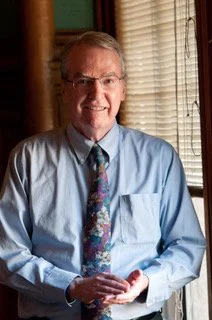
Ted Bowman
Ted Bowman is a grief educator and consultant. He specializes in change and transition and the resulting loss and grief. For over 40 years, he has been a frequent trainer, consultant, and speaker with many groups throughout Minnesota, the United States, and other countries. Ted was an adjunct professor at the University of Minnesota (Family Education) 1981-2012; at the University of Saint Thomas (Social Work) 2006 until 2019; and 1989 to 1996 at United Theological Seminary of the Twin Cities.
Ted is the author of over 125 articles and chapters appearing in books, journals, newspapers, and magazines. His booklets, Loss of Dreams: A Special Kind of Grief, and Finding Hope When Dreams Have Shattered are widely used in grief care. His newest book, Ambiguous Parables: Poem and Prose of Loss and Renewal, was published in November of 2021.
Dr. Tina Barrett, EdD, LCPC
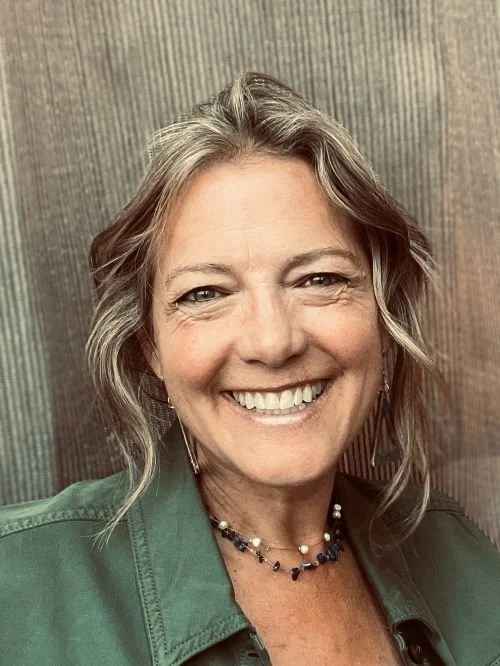
Dr. Tina Barrett, LCPC, Executive Director of Tamarack Grief Resource Center, has specialized in strength-oriented care and fostering resilience following traumatic experiences and attachment breaks. She received her Doctorate in Educational Leadership and Counseling from the University of Montana. Her doctoral research focused on nature-based bereavement programs. Barrett has been a grief group facilitator for over 30 years. A licensed clinical professional counselor, Barrett integrates stories and experiences from over 30 years of work in hospitals, schools, group homes, private practice, wilderness therapy and non-profit grief centers. Barrett’s commitment to excellence in grief and trauma care is matched by her profound commitment to healthy organizations and setting teams up for success. She serves on the Leadership Team for Project Tomorrow Montana, the Presidents’ Circle for the National Alliance for Children’s Grief (NACG), and the Advisory Board for the Tragedy Assistance Program for Survivors (TAPS). Barrett received the Community Educator Award from Association for Death Educators and Counselors (ADEC) in 2019.
Thank you to our sponsors!

Previous speakers have included:
2025 -
Day 1: Dr. Joyce Mphande-Finn, LCPC, LMHC, ACS, NCC, Cultural Influences on the Universal Experience of Grief; Dr. Micki Burns, PhD, The Landscape of Death and Grief in Montana; and 10 Milestones of Healing
Day 2: Dr. Micki Burns, PhD, Healing Communities: Wrapping Around Bereaved Families, Schools, and Neighborhoods and Navigating the Gray Area: Ethical Challenges When Supporting Grief; Dr. John Sommers-Flanagan, PhD, Ten Things Everyone Should Know about Mental Health, Grief, Suicide, and Happiness
2024 –
Day 1: Terrance Lafromboise, MSW-ITR, Suicide Prevention: Building Cultural Foundations in Systems of Care; Dr. Bill Hoy, Finding Direction in Grief: Social Support and Ritual in End-of-Life & Grief Care
Day 2: Dr. Bill Hoy, Finding Direction in Grief: Social Support and Ritual in End-of-Life & Grief Care; Dr. Maegan Rides At The Door, LCPC, The Other Side of ACEs: A Healing Framework for Indigenous Communities
2023 – Illuminating Montana Voices
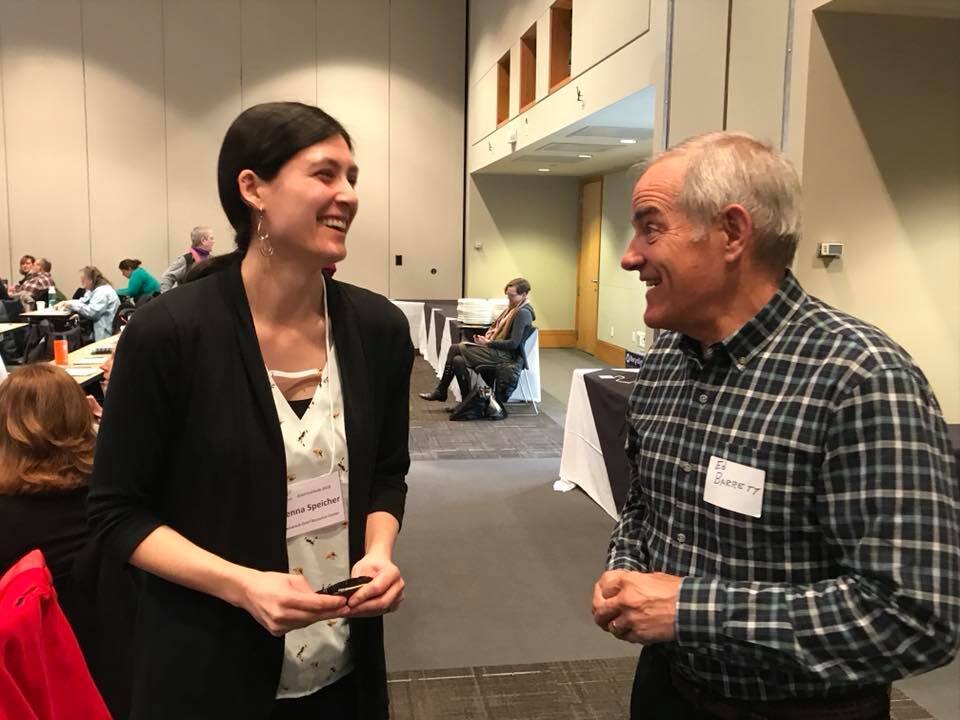
Day 1: Tina Barrett, EdD, LCPC - The Dirt on Grief: Supporting Others, Supporting Ourselves; Sienna Speicher, MA, LCPC - Supporting Native Youth and Families; Daniel Salois, PhD, LCPC - Expanding Strengths-based Suicide Assessment: Illuminating Life Dimensions and Grief
Day 2: Kimberly Parrow, PhD, LCPC - Repairing Relationships: Supporting Couples, Families, and Systems in the Aftermath of Grief; Melanie Trost, PhD, LCSW, CT - Mindful Practices: End-of-Life and Grief Care; Jacob Hansen, MA, LCPC - Panel: The State of Grief in Montana
2022 – Tashel Bordere, PhD, LCPC – Being A Caring Presence: Cultural Humility & Grief
Day 1: Diversity, Equity, and Inclusion in Trauma & Grief Care
Day 2: Non-death and Ambiguous Losses
2021 – J. Eric Gentry, PhD – Trauma Competency: Facing Forward
2020 – Dr. Robert Neimeyer – Grief and the Quest for Meaning
Day 1: Trauma-Informed Interventions
Day 2: Attachment-Informed Interventions
2019 –
Day 1: Donna Schuurman, EdD, FT – Facilitating Positive Outcomes for Grieving Youth
Day 2: Harold Ivan Smith, MA, EdS, FT – Rethinking Ritual: Pausing to Honor Life & Loss
2018 – Pamela Gabby, EdD, FT and Andy McNiel, MA
Day 1: Death & Dying: Strengthening Families Throughout the Journey
Day 2: Bereavement & Post-Traumatic Growth: Modes of Helping After Tragedy
2017 –
Day 1: Tashel Bordere, PhD – To Look at Death Another Way: Individual, Community, and Cultural Factors that Facilitate Resilience through Loss
Day 2: Ben Wolfe, M.Ed, LICSW, FT – Stories, Icebergs, and Family Mobiles: Helping Others As We Help Ourselves
2016 –
Day 1: Jack Jordan, PhD – Suicide Bereavement Clinician Training
Day 2: Alesia K. Alexander, MSW – Creative and Inclusive Approaches to Grief
2015 – John Sommers-Flanagan, PhD
Day 1: Suicide Assessment, Intervention, and Care
Day 2: Social, Emotional, and Cultural Dimensions of Grief
2014 – J. Eric Gentry, PhD
Days 1 & 2: Trauma Practice: Tools for Stabilization and Recovery
Day 3: Professional Resiliency: Fitness for the Frontline
2013 – Jack Jordan, PhD
Day 1: Devastating Losses: New Understandings, New Directions and
Day 2: Grief After Suicide: Understanding Consequences & Caring for Survivors
2012 – Heidi Horsley, PsyD, LCSW – Open to Hope: Grief Following Trauma and Tragedy
2011 – Robert Neimeyer, PhD – Lessons of Loss: Working with Complicated Grief
2010 – Tom Attig, PhD – The Heart of Grief: Theory and Practice Revisited
2009 – Tina Barrett, EdD, LCPC
Day 1: The Dirt on Grief: Nature-Based Programs and Rituals
Day 2: Grief in Schools
2008 – Donna Schuurman, PhD – Children and Grief
2007 – Ken Doka, PhD – Gender Styles and Grief
2006 – Robert Zucker, MA, LCSW – Meaning Reconstruction and Grief
2005 – Jennifer Elison, EdD, LCPC – Liberating Losses: When Death Brings Relief

